Laser cleaning vs abrasive blasting
We sell both laser rentals and laser field services, so treat this with appropriate skepticism, then check it against the numbers, which come from our own test reports including the results that favor blasting.
Side by side
Abrasive blasting is a cleaning and profiling process built for throughput on large areas. Laser ablation is a selective cleaning process built for control and access. On most industrial sites the right answer is both, applied to different parts of the job.
| Laser ablation | Abrasive blasting | |
|---|---|---|
| Large-area bulk removal | Slower: documented in our own testing | Favored: Strong |
| Localized and selective work | Favored: Strong | Poor: prepares far more than needed |
| Feathering into sound coating | Favored: Strong: controlled parameters and beam motion | Poor: can damage adjacent coating |
| Spent media | Favored: None | Significant, requires recovery and disposal |
| Containment setup | Favored: Barricade perimeter, extraction matched to the material | Full containment on most live sites |
| Work alongside other trades | Favored: Possible with laser controls in place | Generally requires clearing the area |
| Anchor profile | 1–2.5 mils typical on rusted steel | Favored: Specified and controlled by media selection |
All 13 comparisons
| Embedded media in surface | Favored: None | Possible |
|---|---|---|
| Water use | Favored: None | None for dry blasting; significant for wet methods |
| Reflective substrates | Cannot be processed: beam deflects | Favored: No issue |
| New steel with mill scale | Weak application | Favored: Strong |
| Noise | Favored: 68 dB measured | Typically higher, plus media impact |
| Cleanup before recoating | Favored: None: coating can follow immediately | Media removal required |
Marks the method each row favors.
Does laser cleaning meet SP-10?
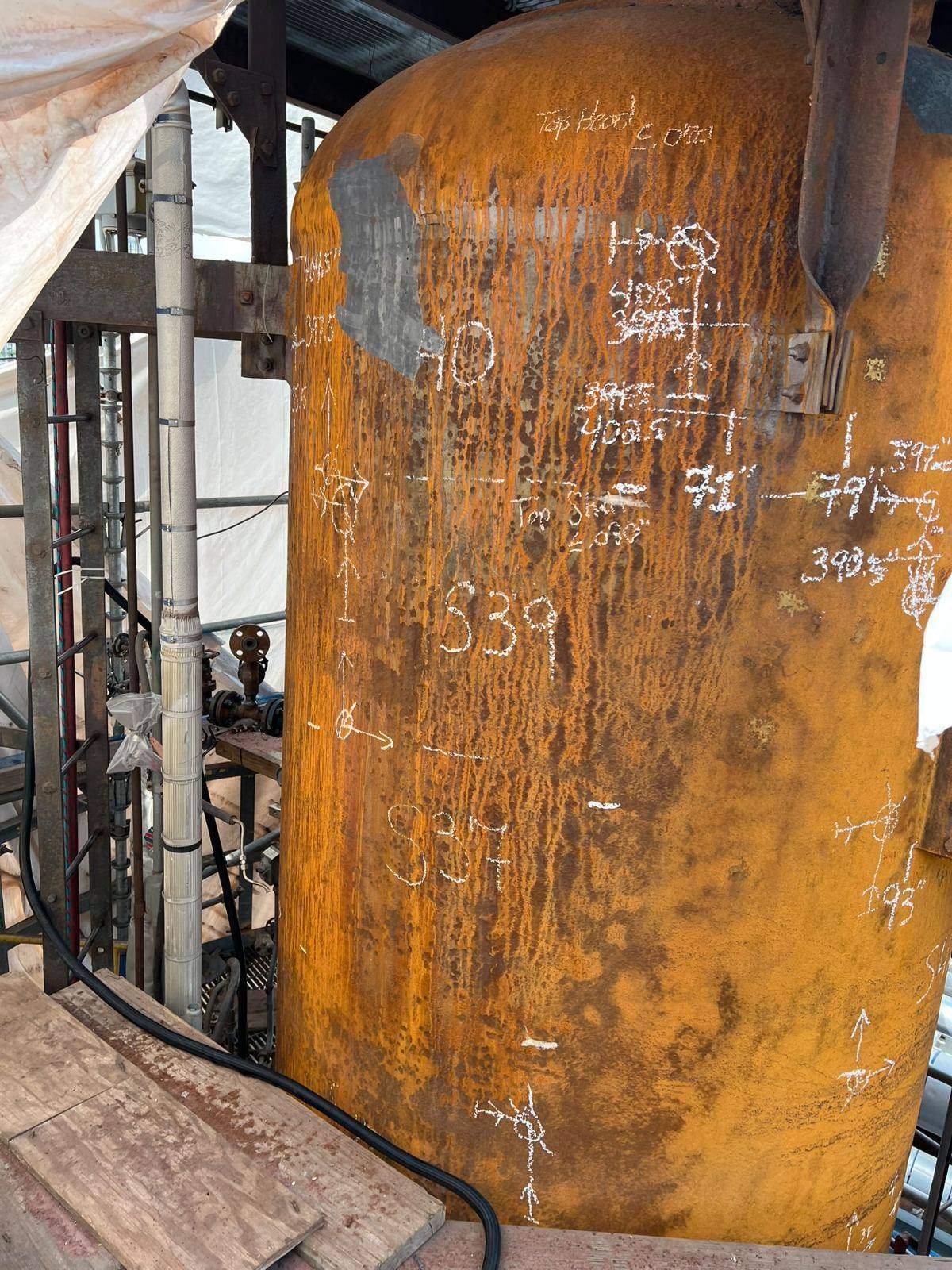
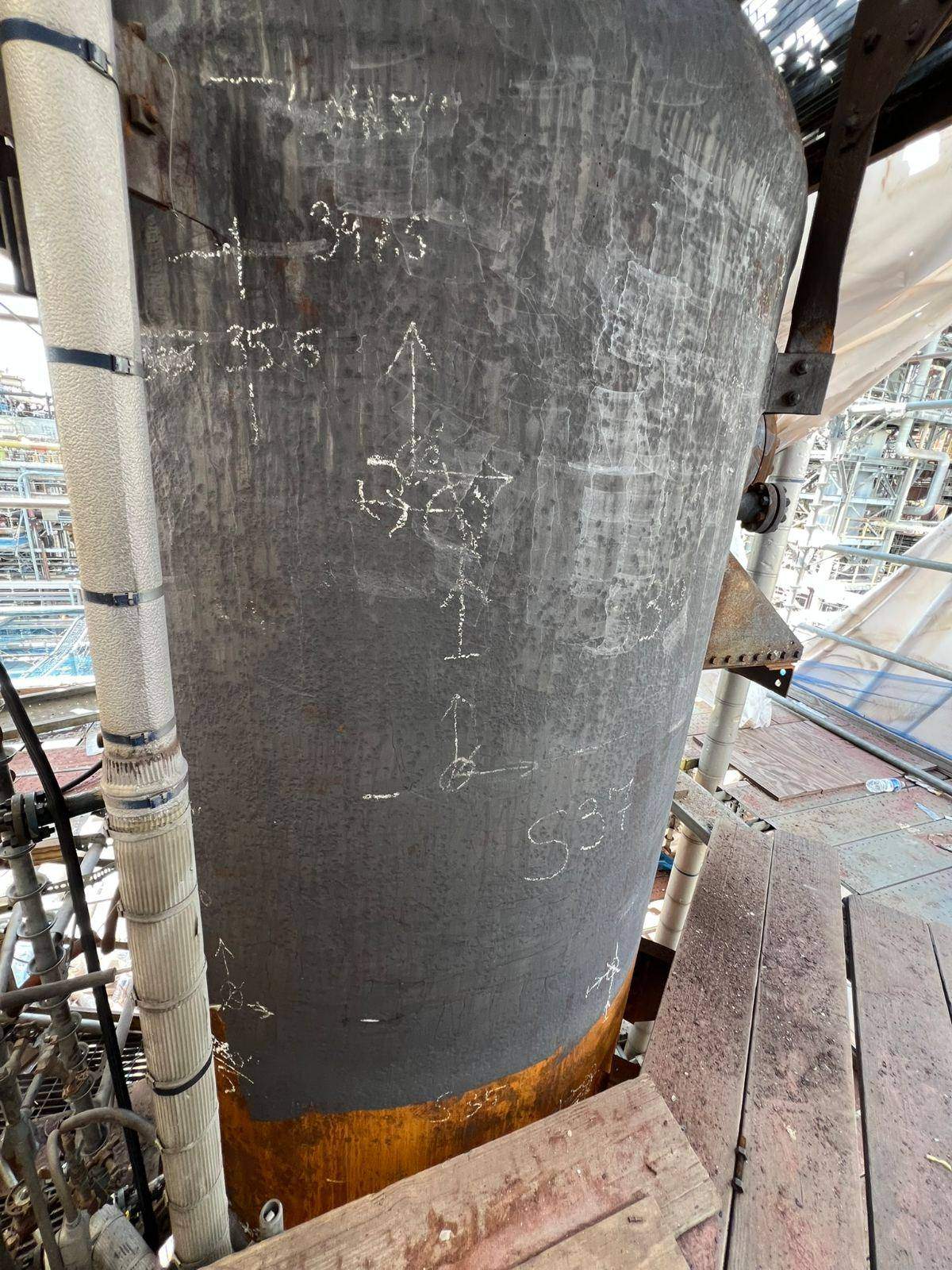
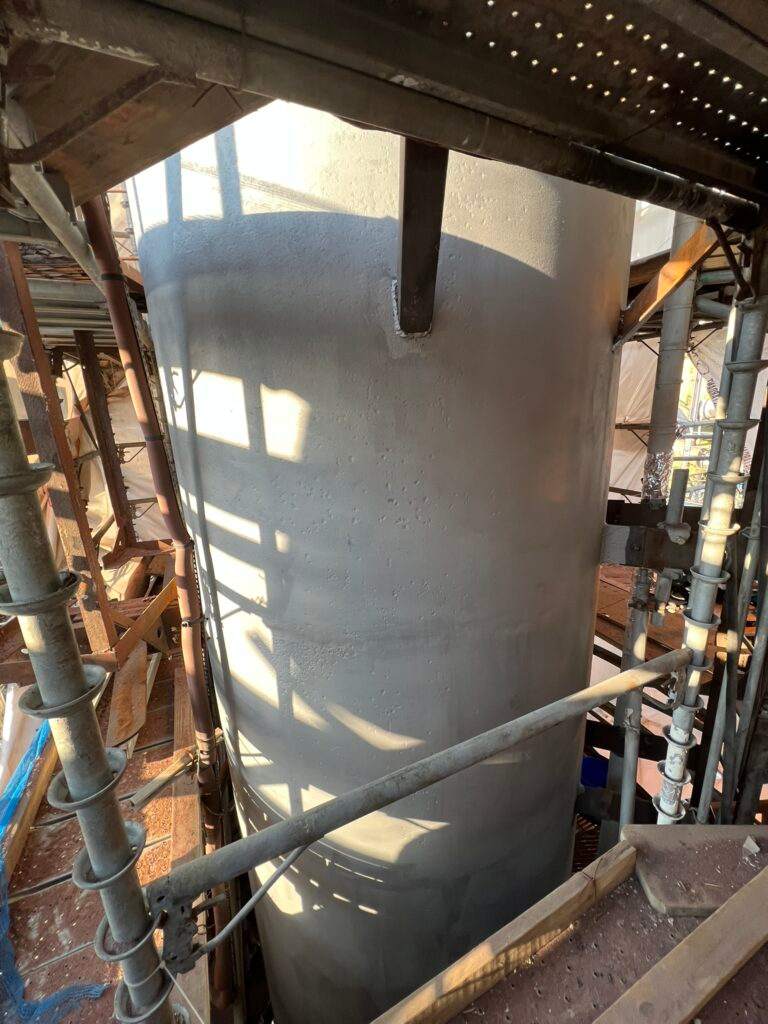
Yes. Extrinite's laser-prepared surfaces meet the cleanliness of SSPC-SP 10 / NACE No. 2, Near-White Metal Blast Cleaning. The standard is written for abrasive blast cleaning, so state the anchor profile from your coating's product data sheet as a separate requirement and measure it on the prepared surface.
Choosing a method
On most industrial sites the answer is both, applied to different parts of the job.
Choose laser ablation when
- Precision matters and surrounding surfaces must be protected
- Coatings, corrosion or contaminants need controlled removal
- Abrasive media, cleanup and disposal create additional costs
- Equipment or components cannot be easily moved or dismantled
- Surface preparation is needed around welds, repairs or inspections
- Minimizing downtime and disruption is a priority
Choose abrasive blasting when
- Large, open surfaces require extensive stripping
- A specific abrasive-blasted anchor profile is mandatory
- Heavy material removal outweighs precision requirements
- The work area can accommodate abrasive containment and cleanup
- Surface preparation specifications explicitly require blasting
Limits of laser cleaning
Where the method underperforms, and what it introduces. Every finding comes from Extrinite's own test reporting.
Production rate on large areas
Laser production rates are slower than traditional sandblasting on thick coatings.
That is recorded in our own coating removal testing. Where you need to strip and profile large continuous areas and throughput is the constraint, abrasive blasting is the right method.
Reflective substrates
Reflective materials cannot be processed.
The beam is deflected from the surface rather than absorbed, so the energy never reaches the contaminant. Changing the parameters does not overcome it.
New steel with mill scale
Performance decreases on new carbon steel with mill scale.
The method is at its best on oxidized surfaces, which absorb the beam efficiently, and at its weakest on clean reflective ones.
Coating behavior
In one test program, Denso Protal 7200 at 35–43 mils was removed swiftly and completely, while SW Duraplate UHS at 50–70 mils proved considerably more difficult.
A hard edge left in the Duraplate by a previous adhesion pull test could not be removed at any setting tried. Thickness alone does not predict the outcome.
Lost metal
Corrosion products come off.
Wall thickness does not come back. CUI and corrosion work still require ultrasonic thickness measurement and engineering assessment; a clean surface changes none of that.
Line of sight
Like abrasive blasting, laser ablation prepares what the beam can reach.
Deep pitting, undercuts and shadowed geometry can retain product. Service leads reach 60 ft from the source on the 2,000 W and 100 ft on the 3,000 W, so large vessels need the source repositioned mid-job.
Surface marking on some reclamation work
In silver brazing removal from PDC cutters, effective removal required around 30% power and left marks on the surface.
A setting that removes the braze without marking has not yet been identified. The underlying diamond was undamaged except at the highest setting tested.
Heat input
In coating removal testing, plate surface temperature rose from 99 °F to 272 °F at the high output setting.
Thin substrates are run at reduced settings and temperature is monitored during work.
Fume and noise
The process generates dust and smoke requiring ventilation and PPE, and measures 68 dB. “No abrasive” does not mean no hazard.Frequently asked questions
For other questions, call 346.217.6583 or email info@extrinite.com.
Is laser cleaning quicker than sandblasting?
Not on thick coatings or large areas. Extrinite's own test reporting records laser production rates as slower than traditional sandblasting. It is quicker where the alternative involves containment setup, media recovery and cleanup for a small prepared area.
Does laser cleaning produce a surface profile?
It produces a measurable anchor profile on rusted surfaces: 1–2.5 mils per Extrinite's operations guidance, with coating trials measuring up to 3.5 mils. Whether that satisfies your specification is a separate question from whether a profile exists, and should be confirmed with your coating manufacturer.
Is one method safer than the other?
Neither is simply safer. Blasting brings media, dust, silica exposure and containment. Laser ablation brings a Class 4 beam hazard, fume from whatever is being removed, and 68 dB noise. Each needs its own controls.
Can the two be used together?
That is usually the best answer on a large job. Blast the large continuous areas where throughput and profile matter; use laser ablation on weld zones, inspection windows, localized repairs and anywhere containment costs more than the cleaning.
Book a demonstration
Method arguments are slower than evidence. Send a representative sample or book a paid demonstration on your actual coating.