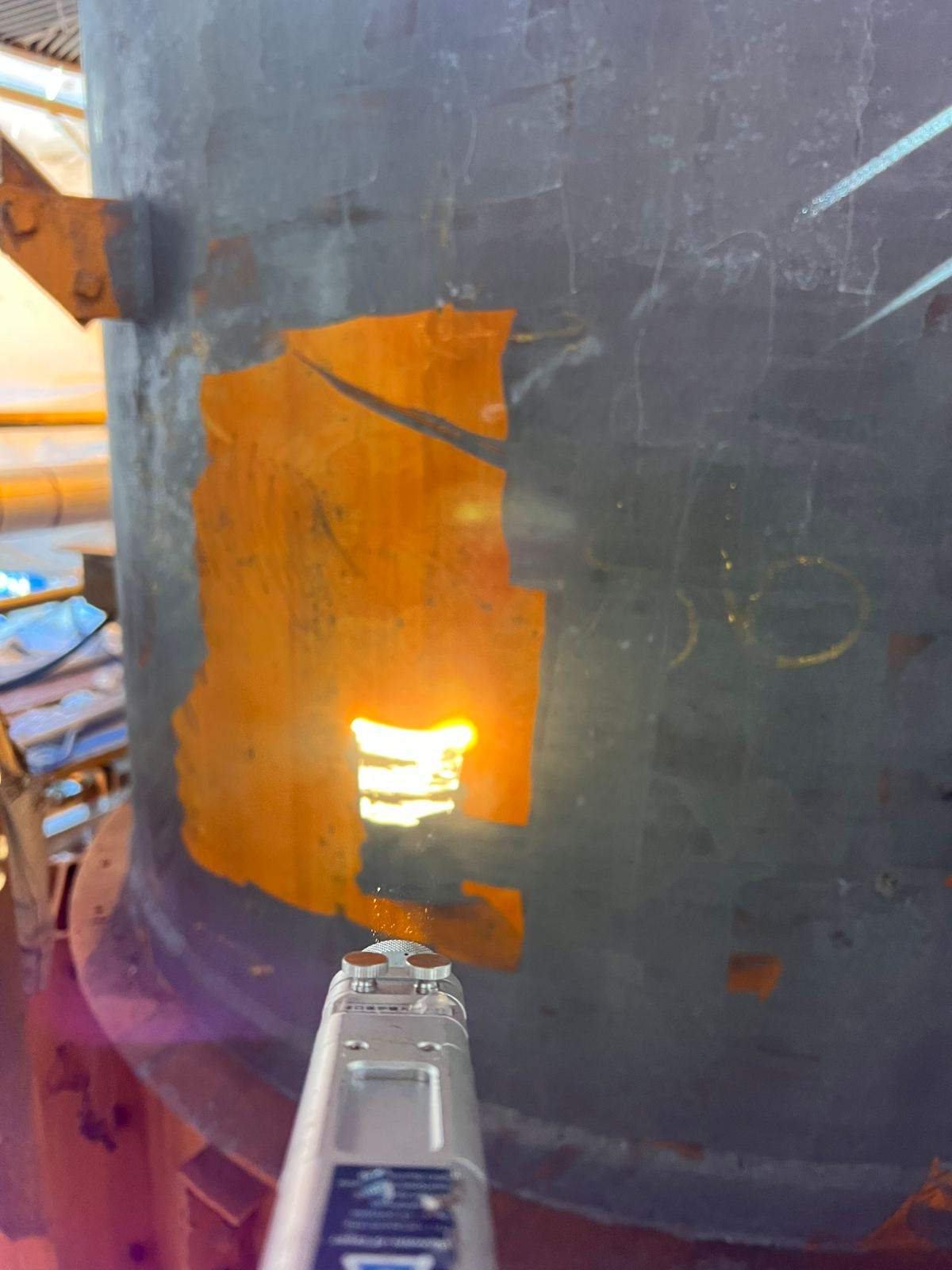
Laser rust and corrosion removal
Removing oxidation and corrosion product from process equipment, structural steel and fabricated assemblies, leaving bare metal with a measurable anchor profile and nothing to sweep up.
Corroded steel
Oxidized surfaces absorb the 1064 nm beam efficiently, which makes rusted steel one of the stronger applications for this method. The contaminant reaches its ablation threshold and is ejected as dust and fume; the underlying metal, which reflects more of the beam, is left intact.
Mill scale and reflective surfaces
The corollary is worth stating: performance drops on new carbon steel with mill scale, and reflective materials cannot be processed at all because the beam is deflected from the surface.
Profile achieved
1–2.5 mils on rusted surfaces with correct parameters, per Extrinite's operations guidance.
Coating trials on unprofiled steel have measured 1.98 to 3.5 mils.
No media, no cleanup
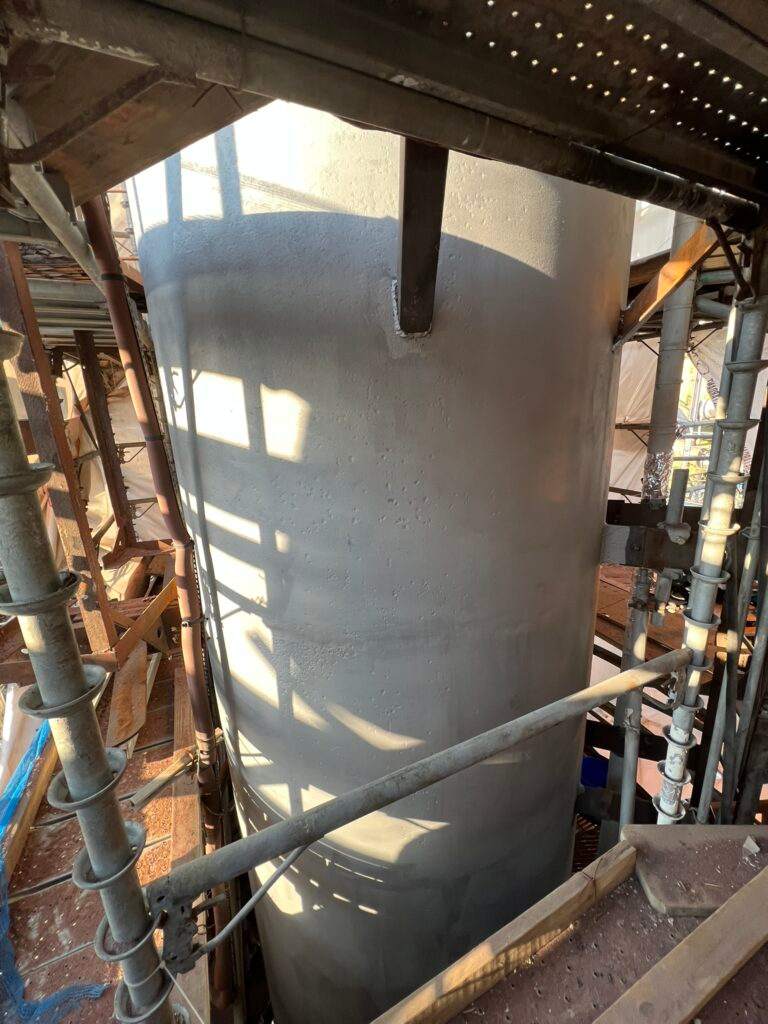
Nothing is added to the surface, so there is no spent abrasive to contain, recover or dispose of, and recoating can follow immediately.Chlorides and hydrocarbons too
The same pass removes surface chlorides and hydrocarbon residue, which in trials eliminated the need for a separate chemical cleaning step.Localized by design
Corrosion is rarely uniform.
The process prepares the area that needs it without touching sound coating alongside.
Limits
Three limits to plan around.
It does not restore lost metal
Corrosion product comes off; wall thickness does not come back.
Thickness verification remains an engineering requirement.
Deep pitting is a line-of-sight problem
The beam cleans what it can see.
Agree the acceptance criterion at the base of pitting before the scope is fixed.
Large areas favor blasting
On long runs and large surfaces, abrasive blasting is generally quicker.Frequently asked questions
For other questions, call 346.217.6583 or email info@extrinite.com.
Does it work better on heavily rusted steel?
Oxidized surfaces absorb the beam well, which is why rusted steel is a strong application and new carbon steel with mill scale is a weak one. Highly reflective surfaces are the worst case: the beam is deflected rather than absorbed.
What profile does it leave?
Extrinite's operations guidance records 1–2.5 mils on rusted surfaces with correct parameters, suitable for most organic coatings. A coating trial on previously unprofiled steel recorded readings from 1.98 to 3.5 mils.
Can you paint straight over it?
There is no abrasive to sweep up, so recoating can follow immediately. In the Carboguard trial, coating was applied the same day the surface was prepared. Confirm with your coating manufacturer that the surface meets their data sheet requirement.
Discuss a corrosion scope
Tell us the asset, the condition and whether a coating follows. We will confirm the method, the system and the realistic approach.