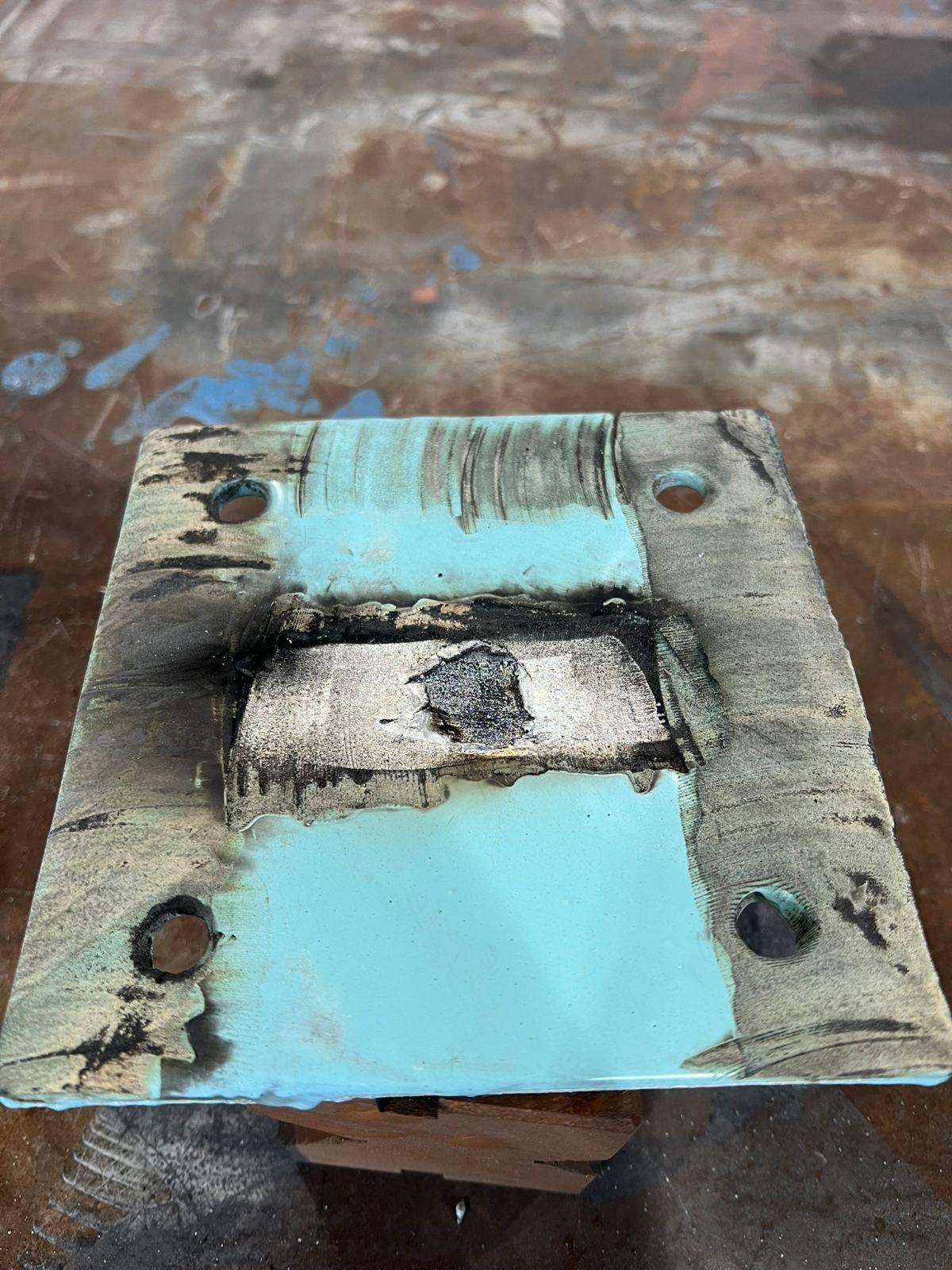
Laser coating and paint removal
Selective removal on defined repair areas, with the ability to feather into sound adjacent coating rather than damaging it. Documented on real coating systems, including the ones that proved difficult.
Test results
Extrinite has run documented removal trials on several coating systems. The results differ more than the thicknesses would suggest, which is the single most useful thing to know before specifying the method.
| Coating | Thickness | Result |
|---|---|---|
| Denso Protal 7200 | 35–43 mils | Removed swiftly and effectively, stripped fully to substrate. Profile of 2.5–3.5 mils achieved once bare. |
| SW Duraplate UHS | 50–70 mils | Considerably more difficult. A hard edge left by a previous pull test could not be removed. |
| Carboguard 890 | 4–6 mils | Removed cleanly at some parameters; at others, abraded and feathered while leaving the coating intact for recoating. |
Limits
Where coating removal by laser struggles.
Production rates are slower than sandblasting on thick coatings
Extrinite's own reporting says so plainly.
If throughput on a large area is the constraint, this is the wrong method.
Thick films need multiple passes
and parameter optimization.
Removal takes time.
Previously disturbed areas can resist removal
A hard edge left by an earlier adhesion pull test survived the full tested power range.The process generates dust and smoke
Ventilation and PPE are required, and hazardous coating constituents need HEPA filtration.Frequently asked questions
For other questions, call 346.217.6583 or email info@extrinite.com.
How thick a coating can you remove?
In documented testing, Denso Protal 7200 at 35–43 mils was removed readily and completely. SW Duraplate UHS at 50–70 mils was considerably harder, and a hard edge from a previous pull test could not be removed at all. The coating system predicts the result better than its thickness.
Can you remove coating without damaging what is next to it?
Yes, and this is one of the method's real strengths. Extrinite's coating trial recorded the laser feathering an existing Carboguard 890 coating cleanly for recoating, which the report attributes to controlled parameters and beam motion rather than the high-pressure abrasive stream that can damage adjacent coating.
Is it quicker than blasting?
On thick coatings, no. Extrinite's own reports record laser production rates as slower than traditional sandblasting. The advantages are selectivity, no spent media, no cleanup step before recoating, and the ability to work alongside other trades.
Test on your coating
Coating behavior is the hardest thing to predict and the easiest thing to test. Send a representative sample or book a paid demonstration.