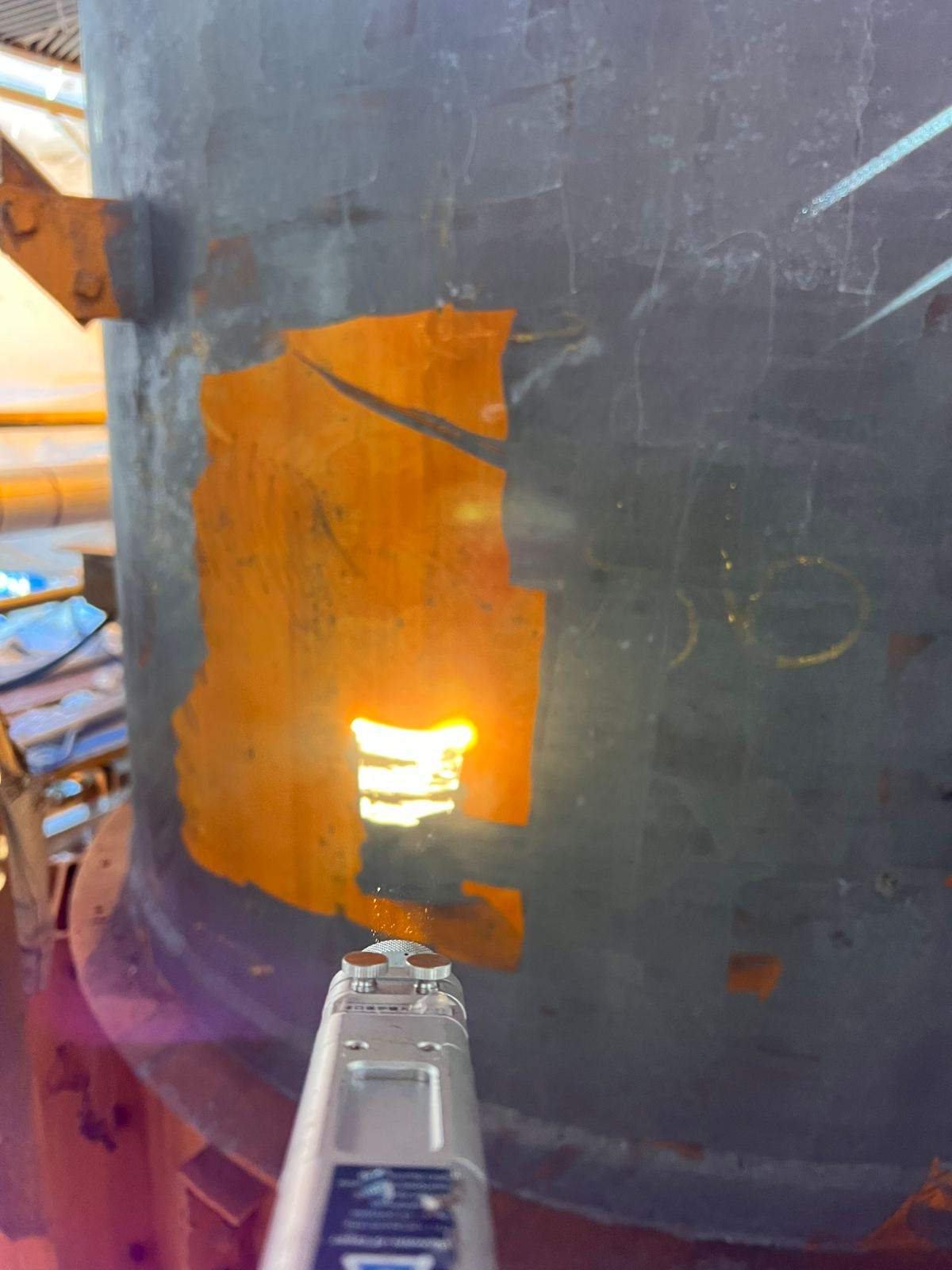
Flash rust after laser cleaning
In sample work in Extrinite's shop, steel cleaned by laser ablation stayed free of visible flash rust longer than abrasive-blasted steel. The result is not guaranteed. Extrinite is setting up a controlled test, and the method is published below.
- Status
- Observed on shop samples
- Next step
- Controlled coupon test
- Readings
- 0 to 72 hours
- Coating window
- No longer window claimed
What was observed
Freshly cleaned carbon steel starts to flash rust when moisture reaches the bare surface. On Extrinite's shop samples, visible flash rust appeared later on laser-cleaned steel than on blasted steel.
What it depends on
How long the difference lasts depends on surface roughness, contamination, humidity and the effect of the laser on the steel surface. None of these has been measured on the samples yet. The coupon test below measures each of them.
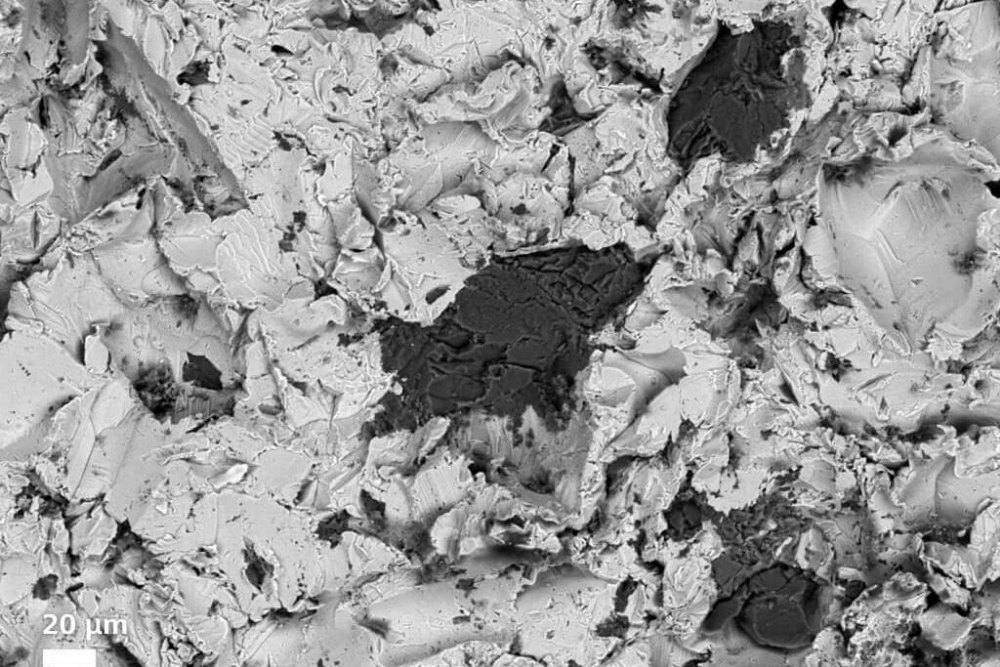 Abrasive blasting
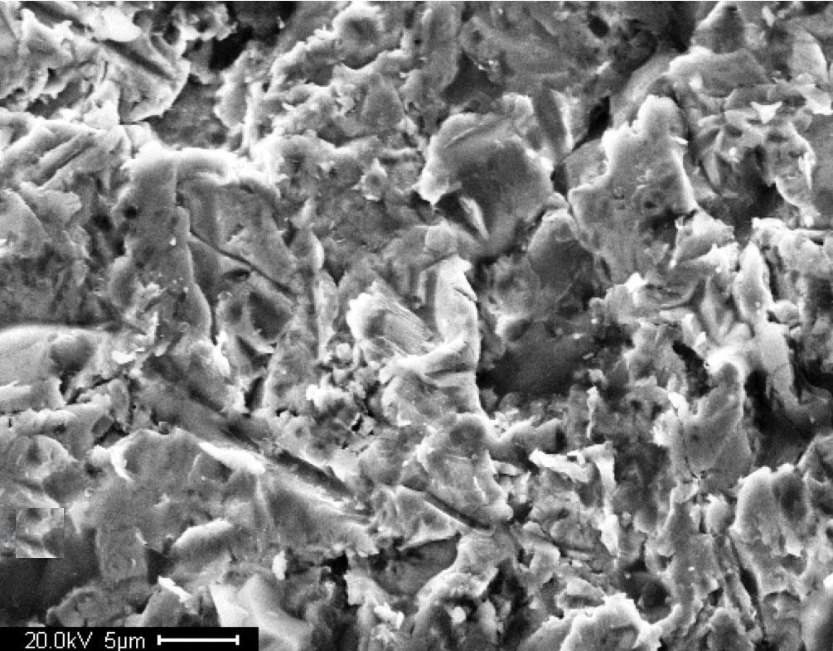 Reference micrograph
The two micrographs are at different magnifications, 20 µm and 5 µm scale bars. Compare the shape of the surface.
Five possible reasons
Each of these may contribute. The test is designed to separate them.
Surface profile and exposed area
Blasting leaves a rough, angular surface with many peaks and valleys. Laser ablation can remove oxidation without creating the same angular profile.
Peaks and valleys can hold moisture and contaminants, which gives corrosion places to start. A smoother surface may have fewer of those sites, but a lower surface area on its own does not guarantee slower rusting.
Contamination from blasting
Blasting can leave embedded abrasive, soluble salts, oil or moisture from the compressed air, and contamination carried over from recycled abrasive.
Some of these speed up corrosion. Laser ablation uses no abrasive media, so that source of contamination is removed.
Laser cleaning does not automatically remove all soluble salts. Salt levels still have to be verified by surface testing.
Oxide chemistry at the surface
The 1064 nm continuous wave systems heat the surface very quickly, which can change the thin oxide layer on the steel.
Depending on power density, scan speed, dwell time and the surrounding atmosphere, a thin and relatively stable iron oxide can form. Magnetite (Fe3O4), for example, can resist corrosion better than more porous iron oxides under some conditions.
This does not mean laser ablation leaves a protective magnetite layer. Laser processing can also produce less protective oxides or leave the steel highly reactive. The test includes oxide analysis where a laboratory is available.
Moisture on the surface
Freshly blasted carbon steel is highly reactive. In humid conditions moisture condenses or adsorbs on it as the steel temperature nears the dew point.
Laser cleaning can change surface roughness, surface energy, wettability (contact angle) and oxide composition. Each of these affects how water spreads across the steel and how corrosion develops.
Laser cleaning does not necessarily make steel repel water. Some freshly laser-treated surfaces are more wettable.
Local heating and drying
The 2,000 W and 3,000 W systems heat the surface locally, which can dry it and drive off adsorbed moisture for a short time.
Abrasive blasting has no such drying effect. This may explain part of the difference in early flash rust, especially when steel is checked soon after cleaning. The effect is temporary and does not explain differences that last several days.
The controlled test
Identical carbon-steel coupons from one material batch, prepared four ways, kept in the same controlled environment and photographed under identical lighting.
Separating roughness from the process
Coupons with comparable surface profiles can also be compared, to separate the effect of roughness from the effect of the laser process itself.
Coupons
| Sample | Preparation | Coupons |
|---|---|---|
| A | Abrasive blastingConventional blast cleaning | 3 minimum |
| B | 2,000 W CW laser ablationRental system, continuous wave | 3 minimum |
| C | 3,000 W CW laser ablationRental system, continuous wave | 3 minimum |
| D | Blasting, then laser cleaningBoth methods on one coupon | 3 minimum |
Measurements on every coupon
- Surface profileASTM D4417
- Soluble saltsISO 8502-6 and ISO 8502-9
- Surface temperature and dew pointRecorded during the test
- Contact angle and wettabilityContact angle measurement
- Visible rust coverage over timePhotographs under identical lighting; ASTM D610 rating, a standard written for coated surfaces
- Surface oxide compositionXPS or Raman spectroscopy, if laboratory testing is available
Readings, in hours after preparation
- 0 h
- 2 h
- 4 h
- 8 h
- 24 h
- 48 h
- 72 h
Results are recorded at each of these times. Every coupon is photographed under identical lighting.
What this page claims
An observation and a test method. Results will be published when the test is complete.
Why it could matter
If the test shows consistently slower flash rust, owners and coating contractors could gain the following. Until then, coat within the window your coating manufacturer and specification set.
Time between preparation and coating
More flexibility in scheduling the coating after the surface is prepared.Less rework
Lower risk of re-preparing a surface that has flash rusted.No abrasive contamination
No embedded media or recycled-abrasive carryover on the steel.Humid conditions
Better control of surface preparation where humidity is high.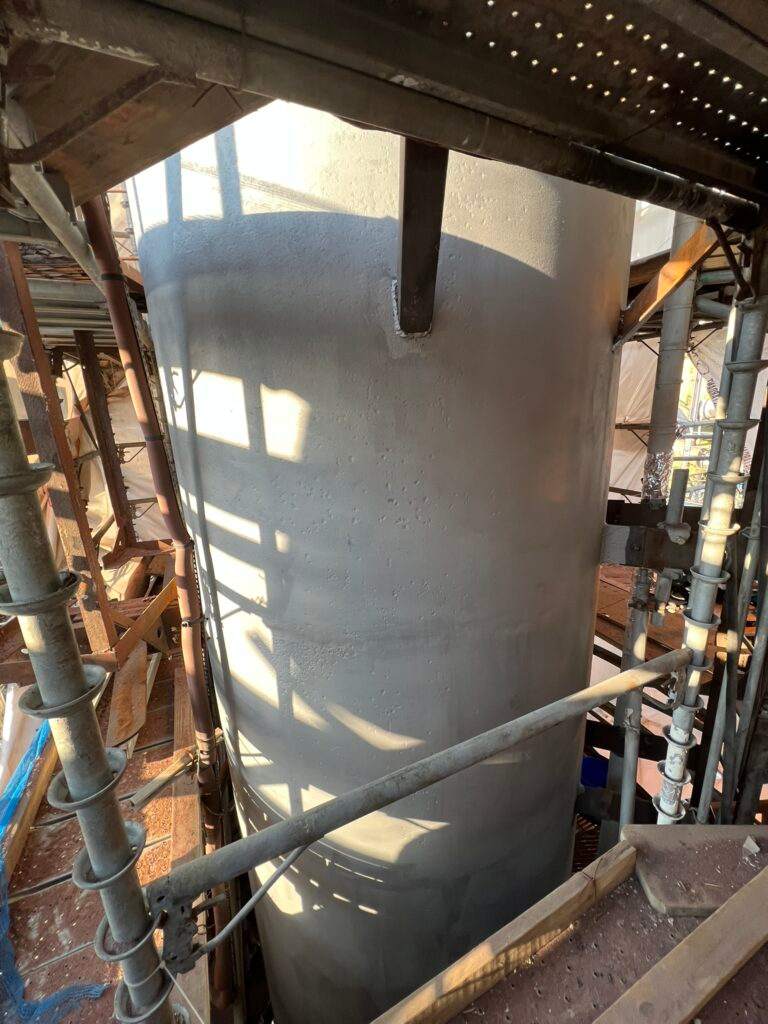
Request the results
Ask to be sent the coupon results when the test is complete, or send a sample of your steel and coating for a side-by-side preparation.