Laser ablation to prepare Carboguard 890 past its recoat window
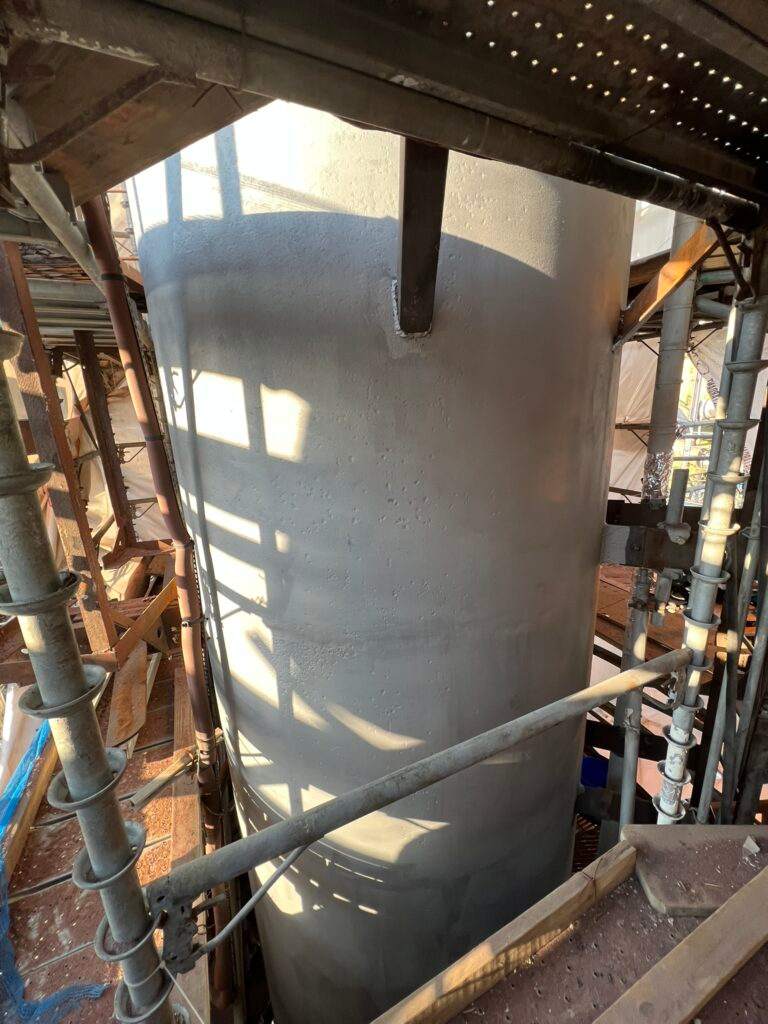
A terminal operator had newly fabricated storage tanks shop-coated with Carboguard 890 that were past the product's 90-day recoat window. Extrinite collaborated with Carboline to test whether laser ablation could prepare those surfaces for recoating in place of sweep blasting.
Results
Adhesion pulls on laser-prepared surfaces maxed out the gauge at 3000 PSI.
What was pulled
Pull tests were performed on five pieces covering the realistic conditions on a tank: bare steel prepared by laser then recoated, existing coating roughened by laser then recoated, a laser-prepared weld area, existing coating adjacent to laser work, and an untouched baseline.
- Adhesion pulls on laser-prepared surfaces, the gauge maximum
- 3000PSI
- Pieces pulled at the gauge maximum, including the untouched baseline
- 5 of 5
- Surface profile recorded on steel with no previous profile
- 1.98–3.5mils
- Carboguard 890 dry film thickness tested
- 4–6mils
| Condition tested | Pull result |
|---|---|
| Carboguard 890 applied directly over laser-prepared steel at 4–5 mils | Maxed out at 3000 PSI |
| Existing 890 roughened by laser without removal, recoated same day | Maxed out at 3000 PSI |
| Field-welded tie-in: rust removed and weld profiled by laser | Maxed out at 3000 PSI |
| Existing 890 adjacent to laser work: did preparation affect it? | Maxed out at 3000 PSI |
| Untouched 890 baseline, no laser preparation | Maxed out at 3000 PSI |
The problem
Carboguard 890 has a 90-day recoat time. After 90 days the surface must be abraded (by sweep blasting or sanding) before additional coats are applied. On newly fabricated storage tanks that have sat through fabrication and transport, that deadline passes routinely.
Sweep blasting
Sweep blasting is the default answer.
On a tank farm it brings media handling, containment, and the risk of over-blasting through the existing film into bare steel on a surface you were trying to keep.
Sanding
Sanding is slow and inconsistent over large areas and around weld seams.The question
The commercial question was narrow: can laser ablation abrade an intact Carboguard 890 film enough to restore recoat adhesion, without compromising the film or the substrate underneath?Parameter study
Extrinite collaborated with Carboline to obtain samples coated with Carboguard 890 at 4–6 mils dry film.
How the testing was done
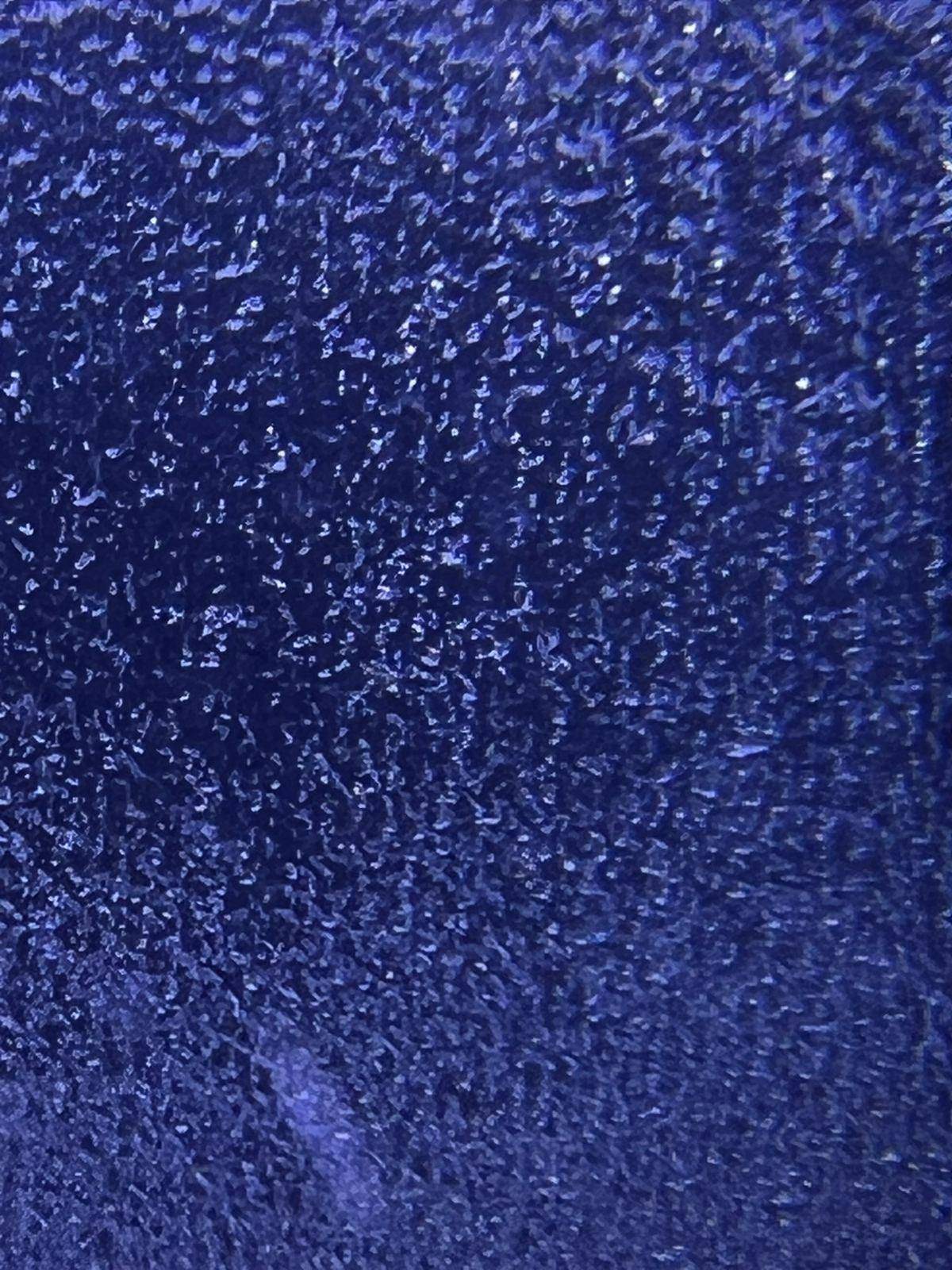
Laser parameters were varied across samples to observe the effect on the coating as the beam moved across the surface. Separately, laser preparation was performed on sections of a newly built tank and adhesion pull tests were carried out and reported by a Carboline field services engineer.
Parameter study on Carboguard 890 samples at 4–6 mils DFT
- 01
Low power / medium frequency
Coating both intact and abraded; surface not compromised; ready for recoating - 02
Low power / high frequency
Most of the coating removed; surface uncompromised; ready for recoating, though less uniform - 03
Medium power / medium frequency
Coating entirely removed from the substrate with the surface profile still visible - 04
High power / medium frequency
Surface profile intact but less so than sample 3; discoloration indicating extra heat exposure
Further findings
Profile, what came off with the coating, and what the results mean for a coating specification.
Surface profile recorded
Profiles of 1.98 mils, 2.80 mils and 3.5 mils were recorded during this work.
The starting steel was Vis 1 B condition with no previous profile before laser cleaning.
Profile matters because it is usually the acceptance criterion a coating manufacturer will name. A surface can be visually clean and still fail a specification on anchor profile. Extrinite measures and reports profile rather than asserting a cleanliness grade and leaving profile to be assumed.
Surface profile and what these systems produceHow Extrinite runs an application test
Removed in the same pass
Hydrocarbons and chlorides came off with the coating.
Laser ablation removed hydrocarbons and chlorides from the surface in the same operation, which eliminates the separate chemical cleaning step on contaminated surfaces. Advantages recorded in Extrinite's report on this work:
Recorded in testing
- No spent media to contain or dispose of
- Hydrocarbons removed: no separate chemical cleaning required
- No chlorides left on the surface
- Small and large areas prepared with minimal setup time
- The 890 blended and feathered without affecting adjacent areas
Stated limits in the same report
- Laser ablation is line of sight. It prepares any visible area, and only visible areas.
- Results depend on parameters being controlled correctly for the coating and substrate.
- Excess power puts heat into the substrate, visible as discoloration.
Your coating specification
 Sherwin-Williams Protective & Marine has stated in writing that it approves laser blasting as a surface preparation method provided the surface profile required by the product data sheet for each product being used is met.
The principle holds regardless of who signs the letter: coating manufacturers accept the preparation method that meets their product's stated surface requirement. So the question to put to your coating supplier is not “do you allow laser cleaning” but “what profile and cleanliness does this product require, and will you accept it if we measure and document that we achieved it”.
Frequently asked questions
For other questions, call 346.217.6583 or email info@extrinite.com.
What problem was being solved?
Carboguard 890 has a 90-day recoat window. Past it, the surface has to be abraded (normally by sweep blasting or sanding) before further coats will adhere. The question was whether laser ablation could do that abrading on newly fabricated storage tanks instead.
What did the adhesion tests show?
Carboguard 890 applied directly over laser-prepared steel, and over laser-roughened existing 890, both pulled at the gauge maximum of 3000 PSI. Unprepared 890 was pulled as a baseline and also maxed out at 3000 PSI.
Does laser ablation damage the existing coating it feathers into?
In this testing it did not. One test piece specifically examined whether laser preparation affected the existing Carboguard 890 and its adhesion; the pulls on it maxed out at 3000 PSI. A close-up recorded the existing coating feathered out for recoating with the adjacent film intact.
What surface profile did laser ablation produce?
Profiles of 1.98, 2.80 and 3.5 mils were recorded on this testing, on steel that had no previous profile. Note that profile is a function of the parameters used, the substrate and the starting condition, and has to be verified on your own material.
Does this mean my coating manufacturer will accept laser ablation?
Not automatically. Acceptance is per product and per specification. Ask your coating manufacturer to confirm in writing that laser ablation is acceptable for the specific product being applied and that the surface profile requirement on that product's data sheet will be met. Extrinite can supply the measured profile data from a test on your material to support that request.
Can you run this test on my coating?
Yes. Extrinite tests on representative samples before committing to a method. That is the only responsible way to answer whether laser ablation works on a specific coating system.
Test on your coating
Send a representative sample or let us test on site. We will report what came off, what profile was produced and whether the method suits your specification, including when the answer is no.